“Water quality” search results (10000)

The basic knowledge of high-quality coffee
Choose your favorite coffee brewing method: the coffee pot has siphon pot, drip filter pot and mocha pot; the bean mill has hand coffee mill and electric coffee mill; the coffee cup has ordinary porcelain and bone porcelain. What suits you is the best, never mind what others say. Coffee beans have single beans (Brazil, Colombia, Mantenin, Yunnan, etc.), flavor beans (usually made up of one or one kind of
2015-05-15 Coffee blending boutique basics common sense utensils choice oneself like coffee
5 Tips for Making Delicious Coffee
Coffee quality: To judge the quality of a cup of coffee, you should have a deep understanding of the basic information of coffee, such as coffee varieties, coffee beans and its geographical characteristics, planting height, processing of green beans, age, purity, size and moisture content, but usually do not have such detailed information, so taste and aroma become the final judgment criteria, experience into coffee
2015-03-05 boutique coffee knowledge brew delicious five tips quality reviews
Introduction to roasting degree crushing and mixing of Coffee
1. The taste of roasted coffee varies with the type of coffee beans, the method of grinding, the degree of roasting, and the quality. The type of beans is an essential problem, but the grinding method and the degree of baking are subjective human factors. Basically, coffee is made through the process of harvest selection, roasting, grinding and extraction, but the most important roasting skill is to control the taste of coffee.
2016-06-06 Coffee characteristics roasting degree crushing blending introduction coffee taste
The origin of coffee and the method of making and brewing coffee
Coffee is English transliteration of Coffee, it is coffee tree seeds roasted coffee beans ground into powder and then brewed from the beverage. Coffee originated in Ethiopia, Africa. There are many accounts about its discovery. One of the legends accepted by most people is that about 3000 years ago, a shepherd saw his sheep eat an unnamed
2014-11-10 Coffee knowledge coffee sources coffee making brewing methods
Factors affecting the quality of espresso by making espresso
First, the addition of prepreg time can improve the success rate of extraction to a certain extent, so some high-end machines have the function of adding free control of prepreg time. As for the comparison between prepreg and non-prepreg production methods, it is more inclined to the difference of production style, not the difference between good and bad. Second, water quality is like making tea. It is often said that so-and-so spring water can be used to induce the fragrance of tea. The water quality does have some impact.
2015-02-26 Intention concentrate Coffee influence espresso quality Factor Prepreg
High-quality coffee common sense delicious coffee preparation
Choose your favorite coffee brewing method: the coffee pot has siphon pot, drip filter pot and mocha pot; the bean mill has hand coffee mill and electric coffee mill; the coffee cup has ordinary porcelain and bone porcelain. What suits you is the best, never mind what others say. Coffee beans have single beans (Brazil, Colombia, Mantenin, Yunnan, etc.), flavor beans (usually made up of one or one kind of
2015-01-17 Boutique coffee common sense delicacy blending utensils choice oneself like
Eight factors affecting the taste of boutique coffee
There are eight main factors affecting coffee: (1) the temperature of the extracted water, (2) the degree of grinding, (3) the extraction pressure, (4) the amount of powder, (5) the degree of extrusion, (6) water quality, (7) machinery and equipment, (8) human temperature: why temperature is listed as the first focus of discussion. Because other factors are better solved and there are coffee bean quality, different varieties are different. But for the average machine, the temperature
2014-11-08 Coffee knowledge boutique coffee science coffee taste factors
Eight factors of coffee common sense affecting coffee taste
There are eight main factors affecting coffee: (1) the temperature of the extracted water, (2) the degree of grinding, (3) the extraction pressure, (4) the amount of powder, (5) the degree of extrusion, (6) water quality, (7) machinery and equipment, (8) human temperature: why temperature is listed as the first focus of discussion. Because other factors are better solved and there are coffee bean quality, different varieties are different. But for the average machine, the temperature
2015-04-21 Coffee common sense influence taste eight factors
The source of coffee and the method of making and blending coffee.
Coffee is the transliteration of English Coffee. It is a drink made from roasted coffee beans, ground into powder and then brewed. (1) A brief introduction to Coffee 1. The origin of coffee Coffee originated in Ethiopia in Africa. There are many theories about discovering it, among which a legend accepted by most people is that about 3000 years ago, a shepherd saw the sheep he was herding ate a kind of nameless food.
2015-04-20 Coffee Source production blending method English transliteration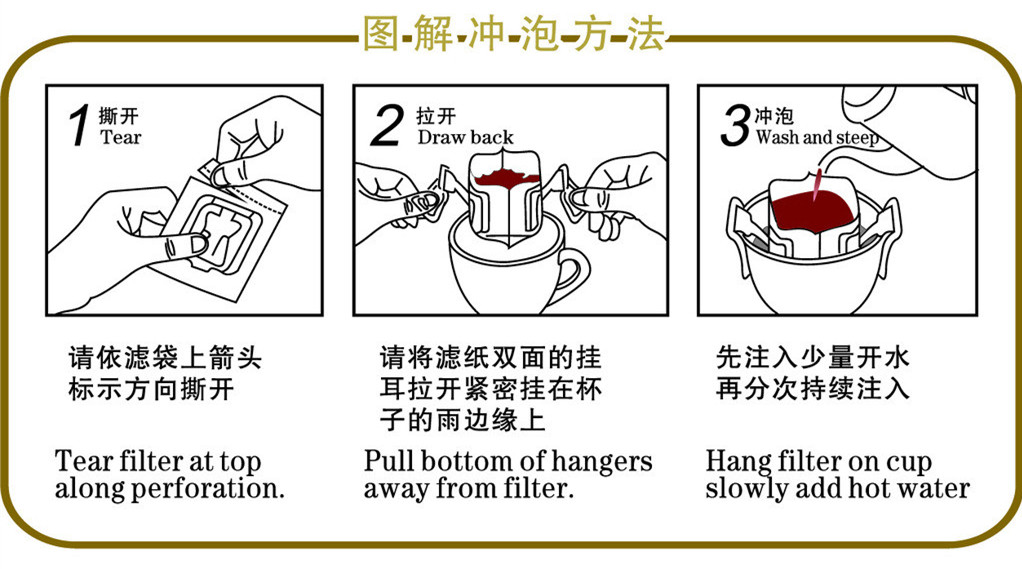
How to make the hanging-ear coffee reach the brewing quality of the hand pot?
Mainly from the fifth step, we will hang the ear coffee into hot water into three times. For the first time, slowly inject a small amount of hot water, soak the coffee powder completely, and then stand still for 10 seconds to make the coffee powder fully awake. The second time, slowly inject the right amount of hot water, at this time you can see that the coffee powder is rich in foam, be careful not to overflow the filter bag
2015-03-11 How can hang up the ear coffee brew get pot quality mainly from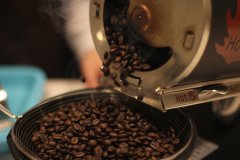
The factors affecting the quality of espresso based on Italian Condensed Common sense
First, the addition of prepreg time can improve the success rate of extraction to a certain extent, so some high-end machines have the function of adding free control of prepreg time. As for the comparison between prepreg and non-prepreg production methods, it is more inclined to the difference of production style, not the difference between good and bad. Second, water quality is like making tea. It is often said that so-and-so spring water can be used to induce the fragrance of tea. The water quality does have some impact.
2015-05-21 Italian condensed common sense influence espresso quality factor prepreg
The growth process of boutique coffee the mode of production of coffee beans
1. The uniformity and thickness of grinding 2. Water quality and water temperature of extracted coffee 3. Gouache ratio 1. After the coffee beans are ground into powder, the coffee beans are ground into powder, and the thickness is adjusted in the thick word of white sugar, which is close to that of the coffee cup. The uniformity is completely determined by the grinding tool, and the more expensive the better. two。 Water quality and water temperature A normal cup of coffee, strong
2016-06-05 Boutique coffee growth process coffee beans mode of production grinding uniformity degree
The source of coffee, the method of making and blending coffee, and matters needing attention.
Coffee is the transliteration of English Coffee. It is a drink made from roasted coffee beans, ground into powder and then brewed. (1) A brief introduction to Coffee 1. The origin of coffee Coffee originated in Ethiopia in Africa. There are many theories about discovering it, among which a legend accepted by most people is that about 3000 years ago, a shepherd saw the sheep he was herding ate a kind of nameless food.
2014-08-11 Coffee source production blending method precautions coffee English Coff
Soul Coffee extraction from Coffee production
What on earth is a cup of coffee? To put it simply, when water passes through the coffee powder, it dissolves and brings out some of the soluble substances in the coffee powder. The process in which water releases the soluble substances from coffee powder is called coffee extraction.
2015-04-17 Coffee making Soul extraction
Introduction of water washing method for the treatment of high-quality coffee and raw beans
Coffee washing began in the mid-18th century. In the washing process, the pulp of the coffee fruit (red cherry) is first removed, then the residual mucous membrane on the inner pericarp is removed by a fermentation tank, and the beans are washed and dried. The difference between the non-washing method and the water washing method is that the non-washing method is to remove the pulp after drying, while the washing method is to remove the pulp before drying. Washing can pass every step.
2015-04-17 Boutique coffee raw beans treatment method introduction washing starting from
The origin of coffee, the method of making and blending coffee, and pay attention to the details.
Coffee is the transliteration of English Coffee. It is a drink made from roasted coffee beans, ground into powder and then brewed. (1) A brief introduction to Coffee 1. The origin of coffee Coffee originated in Ethiopia in Africa. There are many theories about discovering it, among which a legend accepted by most people is that about 3000 years ago, a shepherd saw the sheep he was herding ate a kind of nameless food.
2015-09-11 Coffee origin production blending method attention details coffee English Cof
The usage of siphon coffee siphon pot
1. Tools and materials to be prepared: coffee beans 25g (for two, 12-15G/ for one person), bean grinder, alcohol lamp (with plenty of alcohol in it) or gas lamp or other heating apparatus, siphon pot one set, measuring spoon (about 8G), wooden or bamboo mixing rod, coffee cup group 2, siphon pot filled with water, the amount of water for two is 240CC, that is, the mark of 2CUP in the lower pot, which can be high.
2015-11-05 Siphon brewing coffee usage need preparation tools materials coffee beans
Coffee tips and methods made at home Milk Coffee Italian Coffee Italian style Coffee beans
Water cafe operators buy a range of production equipment before opening, including not only an Italian espresso machine worth 60,000 yuan and dazzling spotlights, but also a complete water treatment system that helps baristas control water quality. As we all know, water accounts for 98% of coffee, so the biggest difficulty in making coffee at home is the most obvious.
2016-06-30 At home making coffee tricks methods Italian style blending coffee beans coffee shop classics
Coffee Xiaobai classroom: the conditions for making delicious coffee
Coffee powder grinding degree, water temperature, extraction speed and so on will affect the taste of coffee. How to brew delicious coffee with stable taste, what are the methods and conditions? The so-called good coffee is the coffee obtained by roasting the flawless beans properly, and the roasted beans are properly ground and extracted when they are fresh. The reason to avoid using the words good and bad is because
2015-09-17 Coffee rookie class brew delicious condition
Extraction principle of hand-brewed coffee introduction to coffee quality, taste and flavor
Siphon coffee taste: can show the original taste of coffee, highlight the taste differences between different individual coffee, the taste is more full-bodied, mellow, mellow. [extraction principle of hand coffee pot]: the process of flavor extraction and filtration is carried out at the same time, and the extraction takes place at the center of pouring water. The more water, the more extraction. Freshly roasted coffee beans will produce more
2016-10-17 Hand brewing coffee extraction principle quality taste flavor introduction